How to Stay Focused While Studying ? Staying focused while studying has become one of the biggest challenges for students in today’s fast-paced digital world. Notifications, social media, background noise, stress, and mental fatigue constantly compete for our attention. Yet, the ability to concentrate deeply is what separates productive study sessions from wasted hours. By applying the right strategies, we can train our minds to stay attentive, absorb information faster, and improve academic performance without feeling overwhelmed.
This complete guide explains exactly how to stay focused while studying using practical, science-backed methods that work for students of all levels.
Table of Contents
Create the Perfect Study Environment
Our surroundings directly affect concentration levels. A cluttered or noisy environment makes the brain work harder to process distractions, reducing mental energy available for studying.
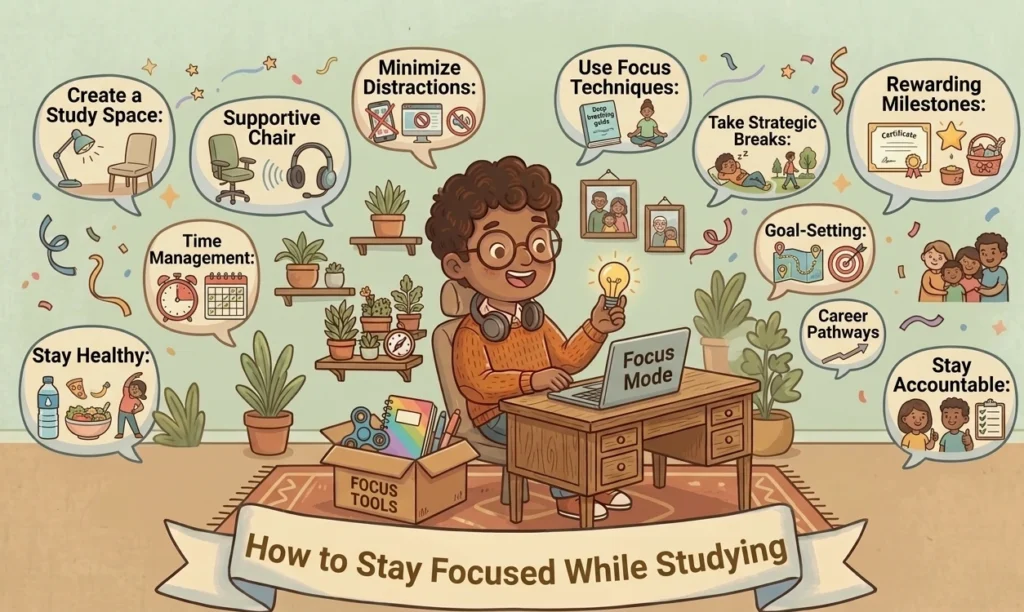
Choose a Dedicated Study Space
We should study in a location associated only with learning. This trains the brain to enter “focus mode” automatically. Ideal study spaces include:
- A quiet bedroom desk
- A library
- A calm café
- A study room
Avoid studying on the bed because it signals relaxation and sleep to the brain.
Keep the Desk Organized
A messy workspace increases mental distractions. Keep only essential items nearby:
- Laptop or books
- Notebook
- Water bottle
- Pens and highlighters
Everything else should be removed from the desk.
Improve Lighting and Comfort
Good lighting reduces eye strain and keeps the brain alert. Natural light works best during the day. Use a comfortable chair that supports proper posture to prevent fatigue during long sessions.
Eliminate Digital Distractions
One notification can completely break concentration. Research shows it takes several minutes to fully regain focus after an interruption.
Turn Off Notifications
Before studying:
- Put the phone on silent
- Disable social media alerts
- Close unnecessary browser tabs
- Log out of distracting apps
Even seeing a phone nearby can reduce focus.
Use Website Blockers
Apps and extensions can block distracting websites temporarily. Popular tools include:
- Freedom
- Cold Turkey
- Forest
- StayFocusd
These tools create a distraction-free digital environment.
Study in Airplane Mode
For maximum concentration, activate airplane mode while studying offline materials. This removes the temptation to constantly check messages or social media.
Use the Pomodoro Technique for Deep Focus
Long study sessions without breaks often lead to mental exhaustion. The Pomodoro Technique helps maintain concentration by dividing work into manageable intervals.
How the Pomodoro Method Works
- Study for 25 minutes
- Take a 5-minute break
- Repeat four times
- Take a longer 15–30 minute break
This method keeps the brain refreshed and prevents burnout.
Why It Works So Well
Short study intervals create urgency and improve mental stamina. Instead of forcing ourselves to study for hours, we focus intensely for smaller periods.
The result is higher productivity with less fatigue.
Set Clear Study Goals
Studying without a goal often leads to procrastination and wandering attention.
Break Large Tasks Into Small Goals
Instead of saying:
- “I will study biology today”
Use specific goals like:
- “Complete Chapter 3 notes”
- “Solve 20 math problems”
- “Memorize 15 vocabulary words”
Specific objectives keep the brain engaged and motivated.
Use a Study Checklist
Checking tasks off a list creates a sense of progress and accomplishment. This boosts motivation and encourages consistency.
Train the Brain to Focus Longer
Focus is like a muscle. The more we train it, the stronger it becomes.
Practice Single-Tasking
Multitasking reduces efficiency and memory retention. We should focus on one subject or task at a time.
Examples:
- Do not watch videos while reading
- Avoid texting during study sessions
- Finish one chapter before moving to another
Single-tasking dramatically improves comprehension.
Increase Study Time Gradually
If focusing for one hour feels difficult, start with 20 minutes of deep concentration and slowly extend the duration over time.
Consistency matters more than intensity.
Take Effective Study Breaks
Breaks are essential for maintaining mental performance.
Move the Body
During breaks:
- Stretch
- Walk around
- Drink water
- Get fresh air
Physical movement increases blood circulation and refreshes the brain.
Avoid Social Media During Breaks
Scrolling through social media overstimulates the mind and makes it harder to refocus afterward.
Instead, choose relaxing activities that calm the brain.
Use Active Learning Techniques
Passive reading often leads to poor concentration and low retention.
Write Notes by Hand
Handwritten notes improve memory and keep the brain actively engaged.
Teach the Material
Explaining concepts aloud helps identify weak points in understanding.
Pretend to teach a class or explain the topic to a friend.
Practice Recall Instead of Re-Reading
Instead of reading the same page repeatedly:
- Close the book
- Recall information from memory
- Test yourself with questions
Active recall strengthens memory and concentration.
Maintain Healthy Sleep Habits
Sleep plays a major role in cognitive performance.
Study After Proper Rest
Lack of sleep reduces:
- Attention span
- Memory
- Problem-solving ability
- Mental endurance
Students who sleep well concentrate better and learn faster.
Avoid All-Night Study Sessions
Cramming overnight reduces information retention and increases stress. Consistent daily study is far more effective.
Aim for 7–9 hours of quality sleep each night.
Eat Brain-Boosting Foods
Nutrition affects mental clarity and focus.
Best Foods for Concentration
Healthy options include:
- Nuts
- Eggs
- Fish
- Fruits
- Dark chocolate
- Oats
- Leafy vegetables
These foods provide stable energy for the brain.
Stay Hydrated
Even mild dehydration reduces concentration and mental performance. Keep water nearby during every study session.
Use Music Carefully While Studying
Music can improve focus for some students but distract others.
Best Types of Study Music
Try:
- Instrumental music
- Lo-fi beats
- Classical music
- Nature sounds
Avoid songs with lyrics during intense reading or memorization tasks.
Control Stress and Anxiety
Stress makes concentration difficult because the mind becomes overloaded with worries.
Practice Deep Breathing
Simple breathing exercises calm the nervous system and improve mental clarity.
Try this technique:
- Inhale for 4 seconds
- Hold for 4 seconds
- Exhale for 4 seconds
Repeat several times before studying.
Stop Perfectionism
Waiting for the “perfect mood” to study leads to procrastination. Progress matters more than perfection.
Start small and build momentum.
Study at the Right Time of Day
Everyone has different peak concentration hours.
Identify Your Most Productive Hours
Some students focus better:
- Early morning
- Afternoon
- Late evening
Track when your energy and concentration feel strongest, then schedule difficult subjects during those hours.
Stay Motivated While Studying
Motivation helps maintain long-term focus.
Reward Yourself
After completing study goals, give yourself small rewards:
- Watch an episode
- Eat a snack
- Take a walk
- Play a game briefly
Rewards reinforce productive habits.
Visualize Long-Term Success
Remember why studying matters:
- Better grades
- Career opportunities
- Academic success
- Personal growth
Strong purpose increases discipline and concentration.
Best Daily Habits for Better Focus
Building strong daily habits makes studying easier over time.
Recommended Focus Habits
- Wake up consistently
- Exercise regularly
- Limit screen time
- Plan study sessions ahead
- Use a study timer
- Review lessons daily
Small habits create major improvements in concentration.
Common Mistakes That Destroy Focus
Avoid these productivity killers:
- Studying while tired
- Constant phone checking
- Multitasking
- Studying without goals
- Skipping breaks
- Overloading the schedule
Removing these habits can instantly improve study performance.
How to Stay Focused While Studying for Exams
Exam preparation requires even stronger concentration.
Prioritize Important Topics
Focus on high-value subjects first instead of wasting time on easier material.
Practice With Timed Tests
Simulating exam conditions trains the brain to maintain focus under pressure.
Review Mistakes Carefully
Analyzing errors improves understanding and prevents repeated mistakes.
Final Thoughts on Staying Focused While Studying
Learning how to stay focused while studying is not about forcing the brain to work endlessly. It is about building smart habits, removing distractions, managing energy levels, and training concentration consistently over time.
When we combine a distraction-free environment, clear goals, proper rest, active learning methods, and disciplined routines, studying becomes more productive and less stressful. Focus improves gradually through repetition and consistency.
The students who succeed are not always the smartest. They are often the ones who master concentration, stay disciplined, and continue studying even when distractions appear.
For More content about Life Hacks and Productivity , Visit this directory
Read also :