Knowing how to change a tire is one of the most valuable driving skills anyone can learn. A flat tire can happen unexpectedly on a busy road, during a road trip, or even while driving close to home. When it happens, staying calm and knowing the correct process can save you time, money, and stress.
Many drivers rely entirely on roadside assistance. However, learning how to change a flat tire gives you confidence and independence. Plus, it’s not nearly as complicated as people think. With the right tools, a safe location, and clear instructions, almost anyone can complete the job successfully.
In this guide, you’ll discover detailed how to change a tire instructions, important safety tips, common mistakes to avoid, and answers to popular questions like how long does it take to change a tire.
Table of Contents
Why Every Driver Should Learn Tire Changing
Flat tires are more common than many people realize. Sharp objects, potholes, worn tread, and road debris can all damage tires. While modern tires are durable, they’re not indestructible.
Learning how to change a tire offers several advantages:
- Improves road safety
- Saves money on towing fees
- Reduces waiting time for assistance
- Builds driving confidence
- Helps during emergencies
Imagine being stranded late at night or in a remote area. In situations like these, understanding how to change a flat tire becomes incredibly useful.
According to the National Highway Traffic Safety Administration, regular tire maintenance and proper handling significantly improve driving safety.
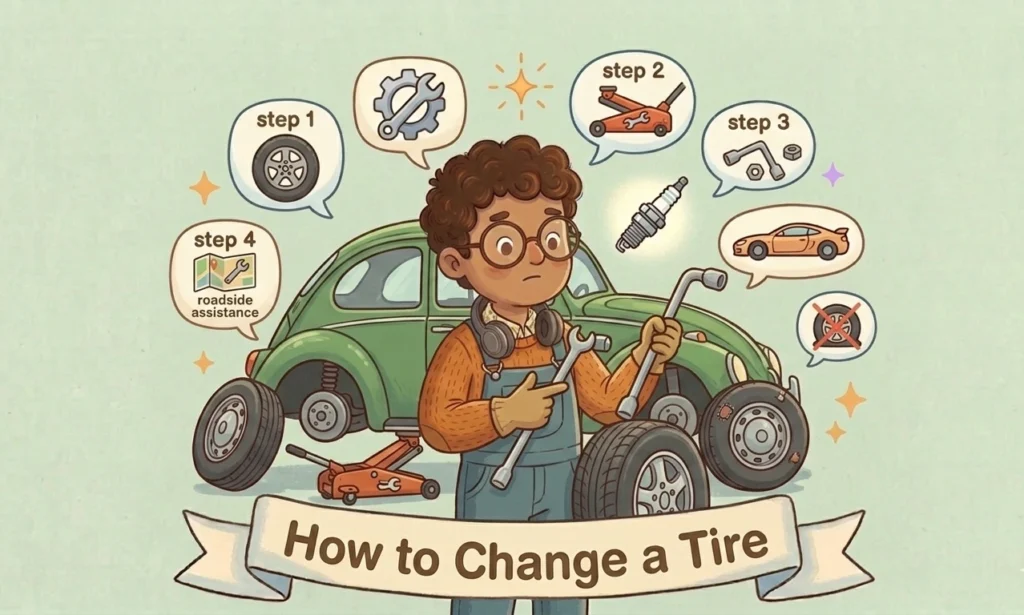
Essential Tools You Need Before Changing a Tire
Before following any how to change a tire instructions, make sure your vehicle contains the proper equipment.
Spare Tire
Most vehicles come with a spare tire stored in the trunk or underneath the vehicle. Check its pressure regularly because an unused spare can lose air over time.
Car Jack
A jack lifts your vehicle off the ground. Your owner’s manual explains the correct jack points for your specific car model.
Lug Wrench
This tool loosens and tightens lug nuts. Some lug wrenches are cross-shaped for better leverage.
Safety Equipment
Helpful safety items include:
- Reflective triangles
- Flashlight
- Gloves
- Wheel wedges
- Rain poncho
- Tire pressure gauge
Having these tools nearby makes how to change a flat tire much safer and easier.
How Long Does It Take to Change a Tire?
One of the most common questions drivers ask is: how long does it take to change a tire?
For beginners, changing a tire usually takes between 30 and 45 minutes. Experienced drivers may complete the process in 15 to 20 minutes.
Several factors affect the time:
| Factor | Impact |
|---|---|
| Experience level | Faster with practice |
| Weather conditions | Rain or snow slows the process |
| Rusted lug nuts | Difficult to remove |
| Vehicle type | SUVs may require extra effort |
| Road conditions | Uneven ground complicates lifting |
The good news is that once you learn how to change a tire, the process becomes much easier each time.
Important Safety Precautions Before You Begin
Safety should always come first. Before starting the tire replacement process, follow these precautions carefully.
- Move away from traffic if possible
- Park on level ground
- Turn on hazard lights
- Engage the parking brake
- Use wheel wedges
- Never place hands under a raised vehicle
- Keep passengers away from the work area
These precautions reduce risks and help ensure your how to change a tire instructions go smoothly.
How to Change a Flat Tire Step by Step
Now let’s go through the complete process of how to change a flat tire step by step.
Step 1: Pull Over Safely
As soon as you notice a flat tire, slow down gradually. Don’t slam on the brakes. Find a safe location away from traffic.
Good places include:
- Parking lots
- Wide road shoulders
- Rest stops
- Flat surfaces
Avoid stopping on curves or hills because visibility may be poor.
Step 2: Turn on Hazard Lights
Hazard lights alert other drivers that your vehicle is stopped. This increases visibility, especially at night or during bad weather.
Step 3: Apply Parking Brake
The parking brake prevents the vehicle from rolling while elevated by the jack.
This simple step is critical during any how to change a tire instructions process.
Step 4: Place Wheel Wedges
Wheel wedges stabilize the car further. Place them behind or in front of the tires opposite the flat tire.
For example:
- Flat front tire → wedges behind rear tires
- Flat rear tire → wedges in front of front tires
Step 5: Remove Hubcap
Some vehicles have hubcaps covering the lug nuts. Use the flat end of the lug wrench to remove it carefully.
Place the hubcap somewhere safe so it doesn’t roll away.
Step 6: Loosen Lug Nuts
Before lifting the car, loosen the lug nuts slightly.
Turn counterclockwise.
Do not remove them fully yet.
Sometimes lug nuts are extremely tight. You may need to use your body weight carefully for extra leverage.
Step 7: Position the Jack
Locate the manufacturer’s recommended jack point. This information is usually found in the owner’s manual.
Improper jack placement can damage the vehicle.
Step 8: Raise the Vehicle
Lift the vehicle until the flat tire is about six inches off the ground.
Make sure the car remains stable during lifting.
If the jack shifts, lower the vehicle immediately and reposition it.
Step 9: Remove the Flat Tire
Now fully remove the loosened lug nuts.
Carefully pull the flat tire straight toward you.
Set it aside safely.
Step 10: Mount the Spare Tire
Align the spare tire with the wheel bolts and push it into place.
Hand-tighten the lug nuts first.
This prevents cross-threading.
Step 11: Tighten Lug Nuts
Partially tighten the lug nuts using a star pattern.
This ensures even pressure distribution.
Step 12: Lower the Vehicle
Lower the vehicle slowly until the tire touches the ground completely.
Now tighten the lug nuts fully using the star pattern again.
Congratulations — you’ve successfully learned how to change a tire.
Common Mistakes to Avoid
Even with detailed how to change a tire instructions, mistakes can happen.
Here are the most common ones:
Ignoring Safety
Some drivers skip hazard lights or fail to use wheel wedges. This increases danger significantly.
Jacking the Car Incorrectly
Wrong jack placement may damage the frame or cause instability.
Over-Tightening Lug Nuts
Excessive force can damage wheel studs.
Driving Too Fast on a Spare Tire
Temporary spare tires usually have speed limits around 50 mph.
Forgetting Tire Pressure
Always check spare tire pressure after installation.
Avoiding these mistakes improves safety and extends tire life.
Temporary Spare Tire vs Full-Size Spare
Not all spare tires are equal.
Here’s a quick comparison:
| Feature | Temporary Spare | Full-Size Spare |
|---|---|---|
| Weight | Lightweight | Heavier |
| Speed Limit | Usually 50 mph | Normal speeds |
| Driving Distance | Limited | Long-term use |
| Storage Space | Smaller | Larger |
| Cost | Less expensive | More expensive |
Temporary spares are designed only for short distances.
If you’re unsure, consult your owner’s manual after learning how to change a flat tire.
When to Repair or Replace a Tire
Not every damaged tire needs replacement.
You can often repair:
- Small punctures
- Nail holes
- Minor tread damage
However, replacement is necessary for:
- Sidewall damage
- Large tears
- Severe tread wear
- Blowouts
If uncertain, visit a certified tire professional.
Tire Maintenance Tips to Prevent Flats
Preventive care reduces the chances of needing emergency how to change a tire instructions later.
Check Tire Pressure Monthly
Underinflated tires wear out faster and increase blowout risk.
Rotate Tires Regularly
Tire rotation promotes even tread wear.
Inspect Tread Depth
Worn tread reduces traction and safety.
Avoid Road Hazards
Potholes and debris can damage tires quickly.
Replace Old Tires
Even unused tires age over time.
Routine maintenance keeps your tires safer and more reliable.
Frequently Asked Questions
1. How long does it take to change a tire?
For most people, it takes between 20 and 45 minutes depending on experience and road conditions.
2. Can I drive long distances on a spare tire?
Temporary spare tires are only for short distances and reduced speeds. Full-size spares are safer for extended driving.
3. Do all cars come with spare tires?
No. Some modern vehicles include tire repair kits instead of spare tires.
4. What should I do if lug nuts won’t loosen?
Use controlled force with the lug wrench. If they remain stuck, call roadside assistance.
5. Is it safe to change a tire on the highway?
Only if you can move far from traffic safely. Otherwise, call emergency roadside help.
6. How often should I check spare tire pressure?
Experts recommend checking it monthly.
7. Can rain affect tire changing?
Yes. Wet surfaces increase slipping hazards and reduce visibility.
8. Should I replace all four tires at once?
Not always. However, matching tire types improves handling and safety.
Conclusion
Learning how to change a tire is an essential life skill for every driver. Whether you experience a puncture during a commute or a flat tire during a long road trip, knowing the correct process helps you stay safe and prepared.
This guide covered complete how to change a tire instructions, safety precautions, maintenance advice, and the answer to how long does it take to change a tire. With practice, the process becomes quicker and less stressful.
Most importantly, preparation makes all the difference. Keep your tools organized, inspect your spare tire regularly, and stay calm if a flat tire happens unexpectedly.
A little knowledge can turn a frustrating roadside problem into a manageable task.
for more content about Cars and Vehicles , visit this directory.
Read also :